Infrastructure HDD Works
Definition, Requirements, Benefits and Steps
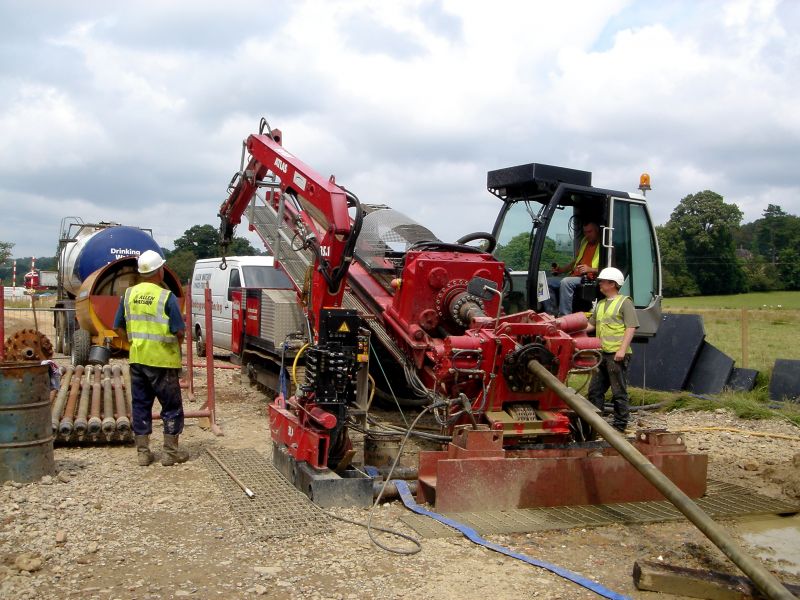
What is HDD works?
Horizontal Directional Drilling (HDD) is a construction technique used to install underground utilities, such as water, gas, sewer, and telecommunications lines.
HDD is a trenchless method that involves drilling a tunnel under the ground and then pulling a pipeline or other utility through the tunnel.
HDD is a less invasive alternative to traditional open-cut excavation methods. It’s suitable for a variety of soil types, including soft to hard clays and wet soils, and can be used in environmentally sensitive areas. HDD can also be used to cross obstacles like roads and watercourses.
Benefits of HDD include
Reduced environmental impact
HDD minimizes surface disruption and reduces the environmental impact of utility installation projects.
Cost-effective
HDD can be cost-efficient over the long term, with faster completion times, reduced restoration needs, and lower overall impact.
Energy-efficient
HDD can be energy-efficient, which can cut operational costs.
Minimal impact
HDD reduces surface disturbance and has a minimal impact on the environment.
Lower construction costs
HDD can result in lower construction costs.
Suitable for sensitive areas
HDD is suitable for environmentally sensitive areas, where digging large pits would be unsuitable.
Pilot Hole
Drilling a pilot hole with a small diameter is the first step. The drill bit grinds the soils in front of the drill stem using high pressure jets and drilling fluid that is pumped via the drill pipe. Additionally, the cuttings will be transported back to the drill rig’s entrance pit by the drilling fluid. Depending on the shot’s size and intricacy, there are multiple methods for tracking the pilot hole.
A walkover guidance system is used for smaller photos, while a wire line magnetics system is used for larger, more intricate shots. In both cases, the precise coordinates of the drill stem are communicated to the location engineer via a transmitter or steering tool that is situated close to the drill head. Continuous readings are made to verify the drill head’s depth, alignment, and slope percentage.
The locator and operator will make adjustments to maintain the pilot hole on the designated bore path. The amount of guiding needed and the current soil conditions will affect the pilot hole’s speed. A reamer is used in place of the beacon housing and bit once it has reached the exit point.
Pre-Reaming
Pre-reaming the pilot hole and making it large enough to accommodate the product lines safely is the second stage. To enlarge the hole, solids are chopped and removed by rotating and pulling back a reamer while pumping drilling fluid. The amount of cuttings removed from the hole and the current soil conditions will affect the pre-reaming speeds.
Bentonite and other additives will be used to ensure a clean and stable hole. Bentonite is used to create a “cake layer” around the outside of the hole during pre-reaming. This will help with the stability of the bore hole and with fluid loss or infiltration. Additives such as polymers are used to help break up the clay soils. A more evenly mixed drilling fluid will prevent any blockages inside of the bore hole.
Pipe Pullback
Pulling the pipe back into the pre-reamed hole is the last step. To avoid any torsional stress from the rotating drill string being transferred to the product pipe, the drill rod and reamer will be fastened to a swivel that is used between the product line and the reamer.
The drilling fluid is poured downhole to lubricate the product pipe as it is drawn into the drill hole.
Steps involved in HDD
Drill
A pilot bore is drilled using a drilling rig.
Steer
The bore is steered to create the desired line and grade.
Pull Reamers
Reamers are pulled back to enlarge the bore to the desired size.
Pull Pipe
The service pipe is pulled back into the bore.