Building Painting Works
Definition, Purposes, Types, and Technique
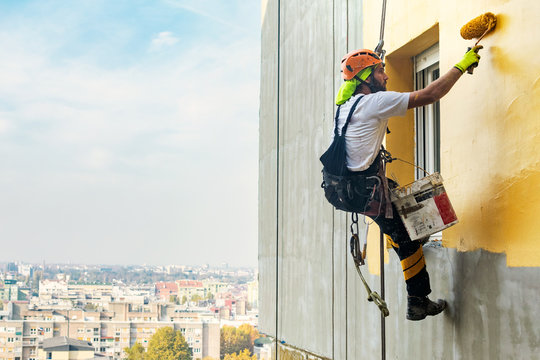
What is building painting?
Building painting, also known as building coating, is the process of applying a coating to a building’s surface to protect it and enhance its appearance. Building paint can serve a variety of purposes
Purposes of Building Painting
Building paint can serve a variety of purposes, including
Protection
Paint can protect a building from the elements, such as sun, rain, and other weather conditions. It can also prevent wood from decaying and metal from corroding.
Decoration
Paint can enhance a building’s visual appeal. Architects and designers can use color schemes to complement the building’s design.
Habitability
Paint can improve the living environment inside a building. For example, it can help with sound insulation and anti-condensation.
Mold and mildew prevention
Paint can help prevent the growth of mold and mildew, which can cause health issues.
Types of Building Painting
Building Painting with Oil-Based Paint
Painting is done using colors that are dissolved in oil. This method is mostly used for painting kitchens because they are easily washable, and stains can be removed with just a damp cloth.
Building Painting with Plastic Paint
Painting with these paints is very easy. Because plastic paint is water-soluble and besides having a faint odor, it dries very quickly. It’s worth knowing that painting with plastic paints is more cost-effective than oil-based paints.
Building Painting with Acrylic Paint
These paints, like plastic paints, are also water-soluble and painting with them is very easy. But the significant difference between them and plastic paints is that these paints are washable. The use of these paints for building painting is a new and modern method that has gained many fans.
Building Painting with Texture Paint
Texture paints come in three different textures: fine, coarse, and medium. Coarse-textured Texture paints are used to cover wall cracks, protrusions, and areas of the wall that require repair and renovation.
Technique in Building Painting
Building painting can be done using various methods, each of which has its unique characteristics. Below, we will explain the distinct features of each painting technique:
Simple Building Painting
This type of building painting is done using soft colors. Nowadays, fans of classic and minimalist decorations often use this type of painting. Since Iranians are fond of patterned carpets, walls with simple colors can create more balance in the decoration.
Color Wash Painting
This method is one of the new and exciting techniques in building painting, where various marble, wood, and metal designs are applied to gypsum walls. This technique creates a visual illusion for the viewer. Similar to creating wood patterns on cabinet doors using various colors, the same technique can be applied to patchy walls.
Metallic Painting
This technique uses metallic paints that give a metallic appearance to the wall. This technique is more suitable for luxurious and modern spaces. It is recommended to use metallic paints on a limited area of the walls to maintain their elegance and beauty.
Multi-Color Painting
This type of building painting involves using several contrasting or complementary colors on a simple background. This technique is considered one of the most beautiful building paintings as it gives a prominent design to the wall. The wall background is a simple color with splashes of thick and contrasting colors sprayed on it.
Patterned Painting
In this method, tools such as rollers, fabric, plastic, cardboard, a brush, and other tools are used to create patterns on the wall. This technique has recently gained popularity in Iran because simple decorations with neutral colors have their own special fans.
Stencil Painting
Another technique in building painting is using stencils to create patterns on the wall. For this, there should be a pre-existing color as the background. Stencils come in various designs that allow you to design freely. It is better to use complementary or contrasting colors for designs placed on a plain wall background.
Textured Painting
This type of painting is one of the simplest in buildings, requiring no special tools or equipment. To create a design, you can use tools such as fabric or a sponge. The wall background should be a simple color to allow you to create textured patterns on the wall.
Wall Relief Work
This technique is similar to embossing and is performed using wood glue or putty. In this method, protruding parts are created on the wall using glue or putty. After the glue or putty dries, you can implement your desired relief designs and then paint them. Recently, geometric and modern designs have become popular in 3D painting.